Articles
H2Tech: Tech Spotlight
TYLER CAMPBELL, Managing Editor
H2 PRODUCTION
ITM unveils ALPHA 50, a new flagship 50-MW full-scope green H2 plant
ITM has unveiled ALPHA 50, a new flagship 50-MW full-scope green hydrogen (H2) plant designed to set a new global benchmark in scalable, cost-effective H2 production. Powered by the company’s proven and leading stack technology, ALPHA 50 is fully skid-mounted, prefabricated and standardized. It consolidates central process units and offers in-built redundancy for key components to maximize plant uptime.
With its compact footprint, ALPHA 50 can be easily configured into larger plants, and is capable of being deployed globally. Needing only tap water and electricity, ALPHA 50 reliably provides high-purity H2 at 30 bar pressure.
ALPHA 50 is designed for outdoor installation and can cope with the widest ambient temperature range, minimizing construction and civil works. Offering superior energy efficiency and capable of load changes within seconds, ALPHA 50 maximizes H2 production.
Now available to customers, the company says that ALPHA 50 offers unmatched value. The full-scope plant is priced at €50 MM, substantially more competitive than any comparable solution, regardless of technology or provider.
For more information, visit: https://itm-power.com/products
VSPARTICLE and Plug Power achieve breakthrough tech for iridium barrier, paving way to the production of $1/kg green H2

VSPARTICLE has announced the peer-reviewed validation of its nanoporous catalyst layer technology, confirming its potential to overcome the critical iridium bottleneck in proton exchange membrane (PEM) electrolyzers. The collaborative project with Plug Power and the Center for Clean Hydrogen, directed by Professor Yushan Yan at the University of Delaware (U.S.), achieved outstanding performance while using up to 90% less iridium.
These results, detailed in the Electrochemical Society (ECS) Meeting in Chicago, surpass the U.S. Department of Energy’s (DOE's) 2026 targets for iridium utilization and performance. This data confirms a viable pathway to green H2 production at $1 per kilogram (kg), a cost that is competitive with H2 derived from steam methane reforming (SMR), which costs between $1.50/kg–$2.50/kg, according to the International Energy Agency (IEA).
PEM electrolyzers are favored for their ability to respond dynamically to intermittent renewable energy. However, their reliance on iridium, one of the rarest platinum group metals (PGMs) with an annual global production of only 7 tons (t)–8 t, has been a major barrier to scale. Traditional catalyst coating methods are inefficient, often requiring 1 mg/cm²–2 mg/cm² of iridium.
VSPARTICLE's technology addresses this by creating a highly uniform, nanoporous structure without polyfluoroalkyl substances (PFAS)-based ionomers or solvents. This not only maximizes the electrochemical surface area (ECSA) of the precious metal but also simplifies the manufacturing process and enables more efficient recycling.
The convergence of this technological leap with the ongoing decline in renewable electricity prices—which have fallen by 90% in the last decade for solar PV—creates a compelling economic case for green H2, potentially achieving the U.S. DOE's "H2 Shot" goal years ahead of schedule.
For more information, visit: https://vsparticle.com/o/technology
Mantle8 unveils breakthrough technology that accelerates H2 exploration
Mantle8 has announced that HOREX®, its proprietary multi-physics technology, has produced the world’s first 3D images of an active underground natural H2 system. For years, the search for natural H2 has been a story of promise and frustration. Despite growing excitement around its potential, no one has yet drilled a commercially viable reservoir. Exploration has often felt like guesswork: expensive, uncertain and driven more by hope than by evidence, but HOREX changes that.
Built on two decades of research, it finally provides explorers a clear picture of what is happening beneath the surface, tracing the journey of H2 from its source in water through the rocks where it is generated to the reservoirs where it gathers. By revealing this hidden system in full, HOREX delivers the long-sought “geological trifecta” for finding H2 in motion—a breakthrough that makes exploration 10 times more cost-effective than traditional methods and has a much lower environmental impact.
The breakthrough reduces exploration risk and enables targeted, efficient drilling, establishing a clear pathway for industry growth. HOREX processes vast datasets in a short amount of time. At Mantle8’s Hydrogeco prospect (formerly known as Comminges) in the French Pyrenees, millions of data points were collected by hundreds of sensors over several weeks across 700 square kilometers to generate a 3D model of the H2 system in the ground.
This study includes the largest and most comprehensive passive seismic and multi-physics investigation of natural H2 ever undertaken combined with surface geophysics and geology. Processed through HOREX, the resulting images reveal source rock size, quality and H2 yield, unlocking H2 generation mapping and flux estimates. It also de-risks the gas phase in imaged reservoirs and pressure, driving optimal drilling locations with unparalleled precision.
By identifying viable reservoirs and their characteristics before drilling begins, HOREX dramatically reduces upfront investment risk and provides a data-driven way to compare and rank opportunities, accelerating the path to drilling decision to hit a first commercial discovery. Modeling suggests natural H2 could be produced at Mantle8’s Hydrogeco prospect for around €0.60/kg, on par with natural gas and far below current European green H2 averages of more than €5/kg.
Natural H2, produced continuously through natural geological processes, represents a potentially vast, low-carbon energy resource. The U.S. Geological Survey (USGS) and multiple academic studies estimate global reserves at 5.6 trillion (T), sufficient to meet world energy demands for generations. However, without reliable exploration technology, this resource has remained largely theoretical.
By imaging and quantifying natural H2 systems, Mantle8’s technology provides the foundation for a scalable natural H2 industry. The technology’s impact extends beyond individual projects, establishing a new industry standard for exploration efficiency. Mantle8 will now deploy its technology across other prospects in its portfolio to prepare a first exploration drilling campaign by 2028. The company aims to deliver commercial production by 2030.
For more information, visit: https://mantle8.com/technology
H2 EQUIPMENT
HOERBIGER to supply compressor package to Hamburg H2 hub
The Hamburg Green Hydrogen Hub (HGHH) plans to build a new 105-MW H2 plant on the site of the former Moorburg coal-fired power plant by 2027. The aim is to produce green H2 for a wide range of applications in mobility and industry. The German company Kraftanlagen Energies & Services has been commissioned to build the infrastructure around the electrolyzer. Kraftanlagen, in turn, has entrusted HOERBIGER with the delivery of three HCP 500 H2 compressor packages.
This package ensures safe, reliable and cost-effective H2 compression for large-scale H2 applications such as trailer filling. Users benefit from an innovative and compact design as a turnkey solution with fast filling capacities. With a high degree of standardization, the HCP 500 is optimized for the lowest total cost of ownership (TCO).
Utilizing Ariel Corp.’s KBH compressor, the high mass flow of the HCP 500 of > 250 kg/hr makes the compressor package from HOERBIGER the ideal solution for trailer filling facilities and heavy-duty refueling stations, ensuring unmatched operational experiences for stationary and intermittent operating conditions.
For more information, visit: https://www.hoerbiger.com/en/products-and-services.html
ZeroAvia ships first flight intent SuperStack Flex fuel cell system to defense sector customer
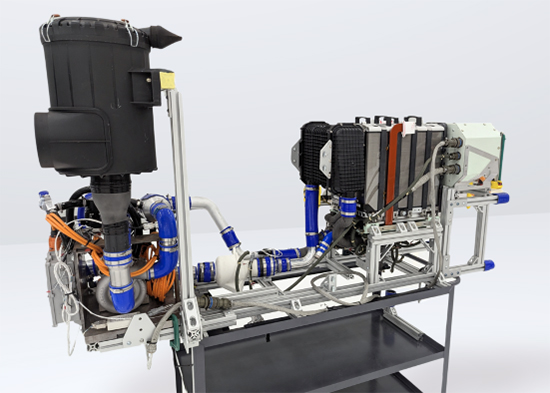
ZeroAvia has shipped its first flight intent SuperStack Flex modular low-temperature proton exchange membrane (LTPEM) fuel cell system to a customer in the defense sector. The system has been fully qualified against the customer’s airworthiness requirements.
ZeroAvia’s SuperStack Flex is a modular fuel cell power generation system that can be configured to meet specific customer power needs while maintaining high power-to-weight ratio and highly flexible configuration.
The lightweight, aerospace optimized balance-of-plant, has been developed to enhance the range of many unmanned air vehicles, with further potential applicability across aerospace, maritime and ground use cases. The system can be used to provide propulsive power or to deliver enhanced onboard electrical capacity, opening up new capabilities in primary propulsion, auxiliary power systems and mission systems including intelligence, surveillance and reconnaissance applications. The Superstack Flex is also an ideal system for the new FAA Mosaic Light Sport Category, providing more than enough power for a standard four-seater general aviation aircraft in this sector.
The SuperStack Flex has demonstrated > 1.2-kW/kg specific power and recently completed more than 100 hrs of testing, consuming > 250 kg of H2, and delivering continuous power at > 150 kW over long intervals, with peak power > 175 kW.
H2 and fuel cell technologies are becoming increasingly relevant to the armed forces due to its unique advantages in energy density, lower detectability thanks to reduced thermal and noise signatures, operational flexibility and lower maintenance costs.
Using selective laser sintering powder-bed additive manufacturing processes, ZeroAvia has been able to perform high-velocity cycles of design, build and test, and quickly combine typical parts or their functions into new monolithic structures. The key parts in the SuperStack Flex’s balance of plant—anode, cathode and coolant manifolds, thermal management, humidification and air compression systems—have been reduced from > 200 parts to < 100, with ~50% weight and volume reductions. Fewer parts mean lighter, more compact, more reliable and less costly systems.
In the final stages of testing, the system was providing power back to ZeroAva’s Propulsion Center of Excellence in Everett, Washington (U.S.), generating enough power to offset the entire building’s consumption.
For more information, visit: https://zeroavia.com/products-services/
Suntory launches Japan’s largest P2G-based energy demand conversion demo to pave way for green H2
Yamanashi Prefecture and 10 companies participating in technological development have received a grant from the National Research and Development Agency, New Energy and Industrial Technology Development Organization’s (NEDO) Green Innovation Fund. This grant enables the companies to conduct a demonstration experiment pertaining to the development of energy demand conversion and usage technology at a large-scale power-to-gas (P2G) system for achieving carbon neutrality to decarbonize Suntory Holdings Ltd.’s two facilities in the area: Suntory Minami Alps Hakushu Water Plant (Hokuto City, Yamanashi Prefecture) and Suntory Hakushu Distillery (Hokuto City, Yamanashi Prefecture). Accordingly, the production of green H2 and its use at the water plant has begun.
With a capacity of 16 MW, the green H2 production facilities installed are among the largest in Japan and if operated 24 hrs/d for 365 d/yr, could produce 2,200 tpy of H2, thereby enabling a CO2 emissions reduction of 16,000 t.
In terms of usage, highly-efficient low-nitrogen oxide (NOx) H2 boilers have been developed and the demonstration experiment on how part of the heat energy used at the water plant can be converted from fossil fuels (natural gas) to H2 will be implemented. The company will decarbonize the water plant and distillery while also promoting the increased utilization of H2 in the region.
From now until the end of 2026, the company will demonstrate how this system procures power from renewable energies to produce green H2 that is in turn used for steam production. In conjunction with the introduction of large volumes of renewable energy in the future, the company will also aim to deploy the aforementioned system to various regions and locations.
Furthermore, the company has officially named the location of this demonstration project the Green Hydrogen Park with the installation of this system in Hakushu, Hokuto City—which has a lush natural environment—with the hope that it will gain widespread popularity and become a hub for providing green H2 in the future.
Yamanashi Prefecture and the companies participating in technological development will continue to work closely together to achieve a carbon neutral society and develop green H2 production technology that utilizes PEM water electrolysis systems while also proactively enlarging demand for H2 energy.
For more information, visit: https://www.suntory.com/csr/?ke=hd
H2 STORAGE AND TRANSPORTATION APPLICATIONS
Provaris establishes robotics innovation center in Norway, resumes H2 prototype tank
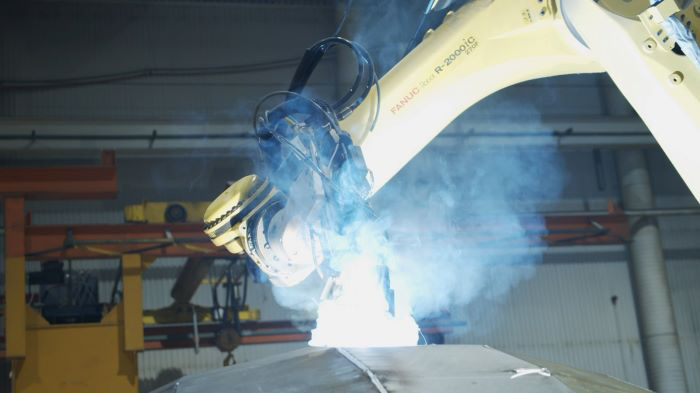
Provaris Energy has announced the establishment of an Innovation Centre to locate and operate a robotic cell for the fabrication and testing of its proprietary tank designs for H2 and liquified carbon dioxide (LCO2) and showcase the cost and production efficiencies for large-scale tank manufacturing.
Located in Fiskå on the West Coast of Norway, the facility establishes a strategic asset for Provaris to develop and operate a fully automated, robotic production cell with potential to scale-up to produce commercial tanks.
The industrial-scale robotic cell features robotic arms, controllers, scalable jigs and laser welding equipment, providing Provaris with key assets to develop and commercialize its proprietary H2NeoTM and LCO2 tank designs. The acquisition of a robotic cell represents a significant strategic asset for Provaris to showcase:
- Feasibility of construction of Provaris’ proprietary layered tank designs
- Production cost efficiencies and quality assurance of laser and laser-hybrid welding
- Cost benefits of combining proven technologies of automation and robotic laser and laser-hybrid welding when constructing large steel tanks for integration with shipping and maritime applications
- Extension of Provaris IP and revenue opportunities to combine the license of tank designs and services to establish and monitor commercial fabrication facilities of licensed tank designs.
For more information, visit: https://www.provaris.energy/supply-chain/hydrogen
H2 APPLICATIONS INNOVATIONS
Energy Vault, PG&E complete ultra-long duration hybrid battery and H2 storage microgrid
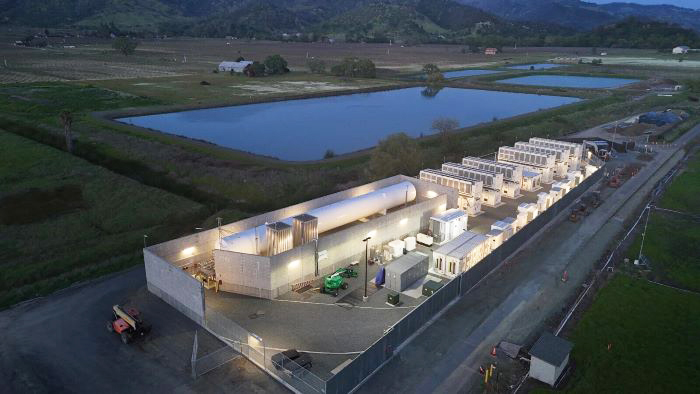
Energy Vault Holdings Inc., a sustainable, grid-scale energy storage solutions company, and Pacific Gas and Electric Company (PG&E), a subsidiary of PG&E Corp., has announced the successful completion and commercial operation of the Calistoga Resiliency Center (CRC), a state-of-the-art hybrid microgrid energy storage facility, located in Calistoga, California (U.S.), that integrates advanced H2 fuel cells with lithium-ion batteries. This landmark project provides a unique, fully sustainable solution to address power resiliency amidst the growing challenges of wildfire risk in California.
Serving approximately 1,600 PG&E customers in and around downtown Calistoga, the CRC represents a transformative step forward in addressing the need for Public Safety Power Shutoffs (PSPS) due to wildfires and extreme weather events. The 293-megawatt hour (MWhr) microgrid system enables the isolated Calistoga community microgrid to maintain power during these necessary safety shutoffs, delivering at least 48 hrs of continuous energy supply with a peak power output of 8.5 MW during PSPS events. This zero-emissions system aligns with California's Renewable Portfolio Standard (RPS) while meeting PG&E's multi-day, long-duration energy storage requirements. The system is orchestrated by Energy Vault's technology-agnostic VaultOS™ Energy Management System, enabling black-start, grid forming and coordinated performance orchestration across all subsystems while communicating with PG&E's Distribution Control Center.
When operating in island mode, the CRC utilizes H2 fuel cells for electricity generation, providing essential power to the community. After supporting black-start and grid forming requirements of the microgrid, Energy Vault's B-VAULT™ DC battery technology works in concert with the fuel cells, ensuring instantaneous response and maintaining grid stability throughout operation. The use of liquid H2 enables extending run time through delivery and transfer into the onsite storage tank without interrupting power supply to the City of Calistoga while also reducing the cost of resiliency services. The CRC serves as a model for Energy Vault's future utility-scale hybrid microgrid system deployments as the only existing zero-emissions solution to address PSPS events that is scalable, bankable and ready to be deployed across California and other regions prone to wildfires as well as locations where improved grid-resiliency is needed.
For more information, visit: https://www.energyvault.com/products/g-vault-gravity-energy-storage H2T
Related Articles
Connect with H2Tech