Articles
Paving the hydrogen highway: How energy leaders are moving hydrogen to market
M. JOHNSON and P. KANAKAMEDALA, Emerson, Houston, Texas (U.S.)
Around the globe, energy companies are facing a challenging task: providing more fuel while reducing carbon emissions and increasing sustainability. Meeting those goals typically means adding new products to organizational portfolios, and today, hydrogen (H2) is one of those emerging products.
H2 will only be as popular as its availability and profitability will allow; therefore, as it gains traction as a new fuel source, companies are exploring ways to build transportation networks to get product to the customers seeking it. In most cases, pipelines are the transport mechanism of choice because they are efficient, safe, well understood and already have existing infrastructure in many locations. As a result, companies are primarily exploring ways to move H2 through pipelines in three different ways: blended with natural gas, blended with other chemicals, or, in the most advanced cases, as a standalone product.
Regardless of the product makeup, however, keeping H2 moving through pipelines—whether retrofit or greenfield—means getting a few key things right. Successful organizations are focused on maintaining cybersecurity, product management, monitoring and safety, and end-to-end integration.
Cybersecure operations are critical. One of the most critical issues facing H2 pipelines today is cybersecurity, and that concern will not be going away any time soon. For many years, pipelines operated with an “it won’t happen to us” mentality; however, recent high-profile attacks have changed that. Almost overnight, the industry realized that pipelines are critical infrastructure and must be protected (FIG. 1).
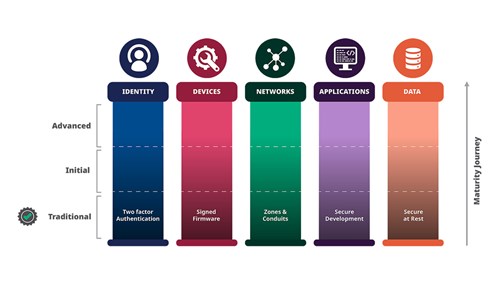
FIG. 1. As companies pursue increased security for their pipelines, many are looking to new models of protection such as zero-trust cybersecurity.
In response, the U.S. Transportation Security Administration offered advice on how companies can better manage their pipelines. In addition, more than 25 oil and gas organizations, with an emphasis on high-throughput midstream natural gas pipeline owner-operators and their industrial control systems vendors, convened through he Joint Cyber Defense Collaborative (JCDC) to undertake the 2023 JCDC Pipelines Cyber Defense Planning Effort.
Companies can take numerous steps to begin navigating these complex guidelines. First and foremost, they should consider the security level of the protocols in use on their networks. Modbus is, by far, the most prevalent protocol for supervisory control and data acquisition (SCADA) pipeline architectures; however, it is also the least secure. Modern protocols like Distributed Network Protocol 3 (DNP3) Secure Authentication 5 (SAv5) offer far more security. Protocols like DNP3 SAv5 were designed for security across expansive architectures. Every device on a DNP3 SAv5 network has a unique key for authentication that is regularly updated. Devices communicating over the network must exchange the trusted keys to have access to perform their tasks, making it far more difficult to add imposter devices.
Companies must also ensure that equipment in the field operates with appropriate user security. Installing field equipment and leaving the default username and password active is one of the simplest and most effective loopholes bad actors can use to exploit systems. Companies should ensure all field technicians and engineers have their own unique usernames with complex passwords that meet minimum length guidelines.
It is just as important for companies to ensure that when a user leaves the organization, the security team has a way to remove that person’s credentials immediately from every unit across all sites, no matter how wide and dispersed the pipeline may be.
In many cases, it is the process of change—whether to eliminate default passwords or to update a personnel change—that causes companies the most problems. Pipelines can be spread across very wide areas, and if the change must be made to every remote terminal unit (RTU) and/or flow measurement point across that network, that can potentially mean many hours and hundreds or thousands of miles of travel if the changes must be completed manually.
The solution is to automate management of user credentials across the pipeline network. With a credential management solution, a central administrator can remotely add, remove and edit user credentials on the different stations across the pipeline, making changes in bulk or individually to ensure security protocols reflect the current environment. The administrator can also use the tool to regularly force password requirements and changes to ensure an even more secure platform.
To enforce a higher level of security within the platform, companies can now also leverage Active Directory (AD), a centralized user authentication and management system widely used in enterprise information technology (IT) environments. The integration of AD enables centralized user and role management through a domain controller. Users can access RTUs with existing enterprise usernames and passwords to streamline compliance with IT and corporate cybersecurity standards. When AD is also paired with the highly secure DNP3 SAv5 communications protocol, protection against unauthorized RTU access is significantly enhanced, and the overall security architecture is fortified (FIG. 2).

FIG. 2. Modern RTUs support AD, ensuring compliance with IT and corporate cybersecurity by requiring existing enterprise usernames and passwords be used to access RTUs in the field.
Another critical element of cybersecure pipeline operation is visibility into security incidents across the pipeline network. The best modern RTUs and flow computers should support security information event management (SIEM). SIEM produces industry standard security logs that can include patterns of abnormal security incidents to help identify potential security threats before they happen.
Modern management solutions. Cybersecure operation is of critical importance. However, companies must also have pipelines that can safely, accurately and reliably move product to where it needs to go. To accomplish this, pipeline operators require tools that can measure products properly, regardless of their composition. If teams are moving H2 or H2-enriched natural gas through a pipeline, they must ensure their measurement devices have the appropriate algorithms to perform the necessary fluid property calculations.
Most measurement devices measure the volume going through the pipe at whatever temperature and pressure are in the pipe at the time. If operators have a mixture that is primarily H2 plus a few other elements, they typically know what the volume is and what the pressure and temperature are. They likely also know the composition, either by sampling on a scheduled basis or using an online gas chromatograph to produce a new analysis every few minutes.
If the team wants to trade energy, mass or standard volumes, they must perform the appropriate fluid property calculations to determine the density (flowing and base) and calorific value per volume/mass at any given moment. As the pressure, temperature or composition changes, the RTU/flow computer will calculate (typically once per second) the new fluid properties to ensure they are getting accurate and traceable values for their energy or standard volume calculations.
Ensuring appropriate monitoring. For H2 and blends, companies frequently look to existing networks of natural gas pipelines around the globe. However, new pipelines are also being built to extend existing infrastructure. In either case, engineering teams must perform significant planning to ensure safety, efficiency and profitability.
H2 is not like other products. It is highly diffusive and is prone to leak through seals, gaskets and very tiny spaces in a pipeline. H2 is also highly flammable and has a wider flammability range than natural gas, increasing the risk and potential severity of fires and explosions in the event of a leak. As a result, many existing pipelines need significant updating. For example, pressure transmitters will often need a gold-plated diaphragm to stop the small H2 atoms from permeating the sensor.
One of the key technologies being used to navigate these complexities is simulation, particularly the digital twin. Engineering teams can use a digital twin to design, test and track properties within a pipeline, both to determine the designs that will bring the most efficiency and to learn the nuances and effects of the characteristics of H2 on the pipeline (FIG. 3).
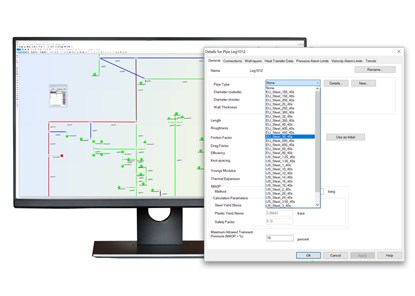
FIG. 3. Digital twin software allows users to efficiently determine how the characteristics of H2 will impact the pipeline.
In most cases, a team will use an offline simulation tool for capacity planning, sizing and parametric studies, and surge studies. Then, once the pipeline has been built or retrofitted and is in operation, teams use real-time simulation for operations to monitor reliability risks, leak detection and integrity across the entire pipeline.
Seamless integration is key. All the capabilities discussed above can be handled with a wide variety of tools. However, to drive the most success across the emerging H2 value chain, companies should approach automation investments with a boundless automation mindset of seamless data mobility and connectivity from end-to-end across all their technologies.
When companies use a wide array of different automation platforms, complexity increases across the entire solution. They must not only manage a wide variety of custom engineered interfaces between different systems, but they also typically create silos of data that make it difficult or impossible to gain visibility across the entire value chain.
Today’s most effective automation solutions for H2 pipelines—whether pure H2 or blends—provide a single, common solution across the entire value chain. All technologies seamlessly integrate to drive visibility across planning, measuring, monitoring, reliability, scheduling and order-to-cash, helping to better drive the entire value chain. A single ecosystem also eliminates potential points of error, as all solutions are designed to work together, and users have a single point of contact to solve issues, making it far easier to get systems up and running quickly and troubleshoot anything that goes wrong.
Reaping the rewards. Like any emerging sector, H2 offers both significant risk and substantial reward. Companies know that if they can be among the earliest competitors in the marketplace, they will secure a competitive advantage for years to come. However, while moving quickly to market is important, it is also essential to deploy H2 pipeline technology properly to navigate the associated risks. That means building a cybersecure infrastructure, selecting tools that are designed for H2 management, employing technologies like simulation to ensure effective monitoring and delivering all those technologies with end-to-end integration to support success across the lifecycle. Technologies exist to accomplish these goals today, and companies bold enough to embrace them will operate on the cutting edge of the energy future.
ABOUT THE AUTHORS
Martin Johnson is the Director of Product Marketing with Emerson’s Energy and Transportation Solutions business. He focuses on modern, cybersecure flow measurement automation for reliable, safer and more sustainable operations. His expertise in control and measurement for wide area operations ensures product development of DeltaV™ remote terminal units and flow computers and aligns with the evolving needs of the global energy market. Johnson earned a Bch degree in engineering from the University of Surrey.
Phani Kanakamedala is Product Manager for Emerson’s Pipeline Management Software. He has been involved with pipeline simulation and modeling applications for > 17 yrs. He specializes in system design, development and product management. In his current role, Kanakamedala works with customers and various stakeholders to determine their needs and then applies this input and knowledge to effectively manage the product roadmap. Kanakamedala earned a Bch degree in computer science and engineering from KL University, and an MS degree in computer science from the University of Houston.
Related Articles
Connect with H2Tech