News
BZI, NOVA RE Suria (NRES) to develop green hydrogen plant project in Indonesia
Bin Zayed International (BZI) has formalized its partnership with NOVA RE Suria (NRES) to develop a Green Hydrogen Plant Project (PGH2P) in Paka, Terengganu. Through this strategic partnership agreement, the company will come on board as the lead investor, strengthening a project that will help shape Malaysia’s future hydrogen landscape.
This initiative directly supports Malaysia’s commitments under the National Energy Transition Roadmap (NETR) and the Hydrogen Economy and Technology Roadmap (HETR) and reinforces the nation’s position as a future regional leader in green hydrogen.
A partnership designed with Malaysia’s hydrogen future in mind. For BZI, this signing represents more than a formal agreement, it marks the beginning of a collaboration to help Malaysia scale its hydrogen ecosystem, strengthen supply and demand, and open new export pathways within the Asia Pacific hydrogen value chain.
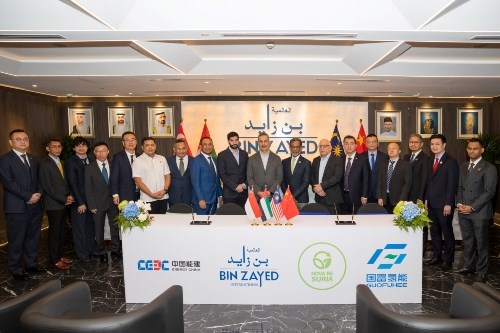
The signing of the strategic partnership agreement between BZI and NRES, marking a landmark collaboration to advance the development of the Paka Green Hydrogen Plant in Terengganu.
“The PGH2P project represents a commitment to Malaysia’s long-term energy resilience and a belief in the country’s potential to lead Southeast Asia’s transition to clean hydrogen. BZI is proud to collaborate in this initiative, which also reflects our continued commitment to pioneering high-impact clean-energy investments, while reinforcing our ambition to support Malaysia’s energy-transition agenda,” said Dato’ Sri Dr. Shamir Kumar Nandy, Group Managing Director of Bin Zayed International.
For Nova RE Suria Sdn. Bhd., the partnership represents a milestone in its push to accelerate Malaysia’s adoption of future-ready energy solutions. With the backing of Malaysian renewable energy developers and foreign institutional investors, NRES was established as a dedicated vehicle to mobilize capital, technology and industrial partnerships for hydrogen development.
“PGH2P is a catalytic project that showcases Malaysia’s capability to produce world-class green hydrogen at scale. Today’s signing with BZI brings not just institutional strength, but also a shared commitment to driving innovation, sustainability and long-term value creation. Together with BZI, we look forward to building a foundation that positions Malaysia competitively in the global hydrogen marketplace,” said Mohd. Izhar Bin Ibrahim, Director of Nova RE Suria Sdn. Bhd.
A first-mover advantage in Malaysia’s hydrogen journey. Located in Paka, Terengganu, the PGH2P project is envisioned as one of the first large-scale green hydrogen facilities in Malaysia and feature a 200-MW ALK Electrolyzers hydrogen production plant, powered by grid-supplied renewable energy,
At full capacity, PGH2P is expected to produce nearly 30,000 tpy of green hydrogen, supplying both domestic industrial off-takers and international buyers.
The EPCC Framework Agreement between NRES and CEEC formalizes CEEC’s role in delivering key engineering and construction capabilities for the PGH2P project.
Supporting the project, a sophisticated ecosystem is being assembled. NRES, the project developer, has also secured a framework EPC agreement with China Energy Engineering Corporation (CEEC) – one of the world’s largest infrastructure and energy engineering conglomerates – to develop the hydrogen facility.
The project also includes a strategic cooperation with China Jiangsu Guofu Hydrogen Energy Equipment Co., Ltd. (GUOFUHEE) to support the promotion and global distribution of green hydrogen and its derivatives, including green ammonia and green methanol.
PGH2P will be developed as part of a wider integrated energy system, capable of supplying carbon-free fuel for local consumption, while also producing premium-grade hydrogen for export. Such dual functionality positions it as a flagship model for future green infrastructure collaborations.
Tapping into the global hydrogen boom. Malaysia’s hydrogen generation market is projected to grow at a modest 4.8% CAGR through 2030, at a time when the global hydrogen ecosystem, especially purification, storage, and engineering solutions — is expanding even more rapidly. The hydrogen purification equipment market alone is projected to grow over 14% CAGR between 2025 and 2033, reflecting rising global demand.
With Malaysia’s strong industrial base, strategic location, and supportive government policies, the country is in a good position to play a bigger role in Asia’s clean-energy transition. The PGH2P project strengthens this by giving Malaysia an early headstart in a fast-growing hydrogen sector, in line with national goals such as net-zero GHG emissions by 2050, NETR, and HETR. As more countries move quickly to develop hydrogen, PGH2P helps Malaysia secure a solid place in the global hydrogen market, while demonstrating how public and private partners can work together to drive industrial decarbonization, scale green technologies, and attract new investment and talent.
From The Archives
Connect with H2Tech