News
StreamTec supports Worley for the AquaDuctus hydrogen pipeline in the German North Sea
StreamTec is supporting Worley for the AquaDuctus offshore hydrogen pipeline, a flagship project within the AquaVentus initiative that will play a central role in building Europe’s future hydrogen infrastructure.
AquaDuctus is a GW-scale offshore hydrogen pipeline planned for the German North Sea. Designed to provide open and non-discriminatory access to multiple network users, the pipeline will enable green hydrogen producers, particularly those linked to offshore wind, to transport hydrogen from offshore production sites to the European mainland.
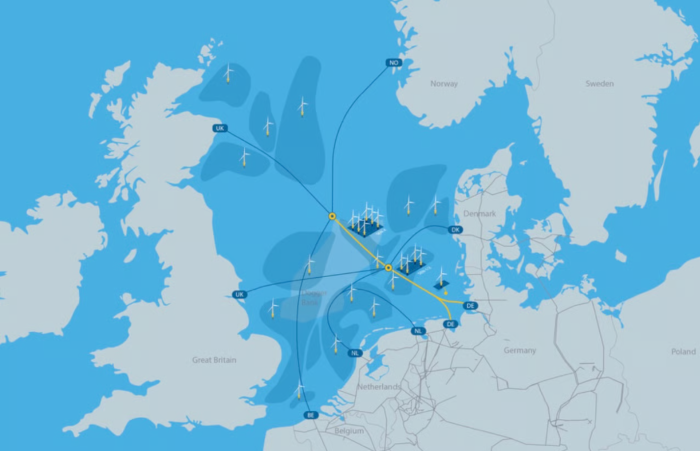
Recognized as an Important Project of Common European Interest (IPCEI), AquaDuctus will form the core of an interconnected offshore hydrogen network linking Germany with neighboring North Sea countries, including the Netherlands, Belgium, Denmark, the United Kingdom, and Norway. By connecting European hydrogen production and demand centers, the project supports cross-border collaboration and the large-scale deployment of green hydrogen.
StreamTec/Worley is providing EPC-Management services across all project phases, including:
- Select (Phase 1): Project development phase
- Define (Phase 2): Planning phase
- Execute (Phase 3): Execution phase.
The overall scope led by Worley includes engineering, permitting, inspections, documentation review, and schedule and cost monitoring. It also includes the supervision and management of engineering, procurement, EPC, and commissioning contractors. Through these services, Worley is helping to ensure quality, safety, and delivery certainty throughout the project lifecycle.
StreamTec will lead the extensive permitting scope and provide specialized expertise in offshore construction and materials. StreamTec has extensive experience of offshore pipeline projects in Germany including the H₂-ready OAL Pipeline, as well as involvement in other major planned H₂ pipeline systems in the EU such as the BHC and NBHC projects and is delighted to join forces with Worley as part of the execution team.
As the first-of-a-kind large-diameter offshore hydrogen pipeline, AquaDuctus will also serve as a connection hub for hydrogen-producing wind parks and future interconnecting pipelines across the North Sea. The project represents a significant milestone in enabling a scalable, integrated hydrogen economy and advancing Europe’s energy transition.
From The Archives
Connect with H2Tech