News
LSBU opens high-standard hydrogen lab with unique metal‑hydride test rigs
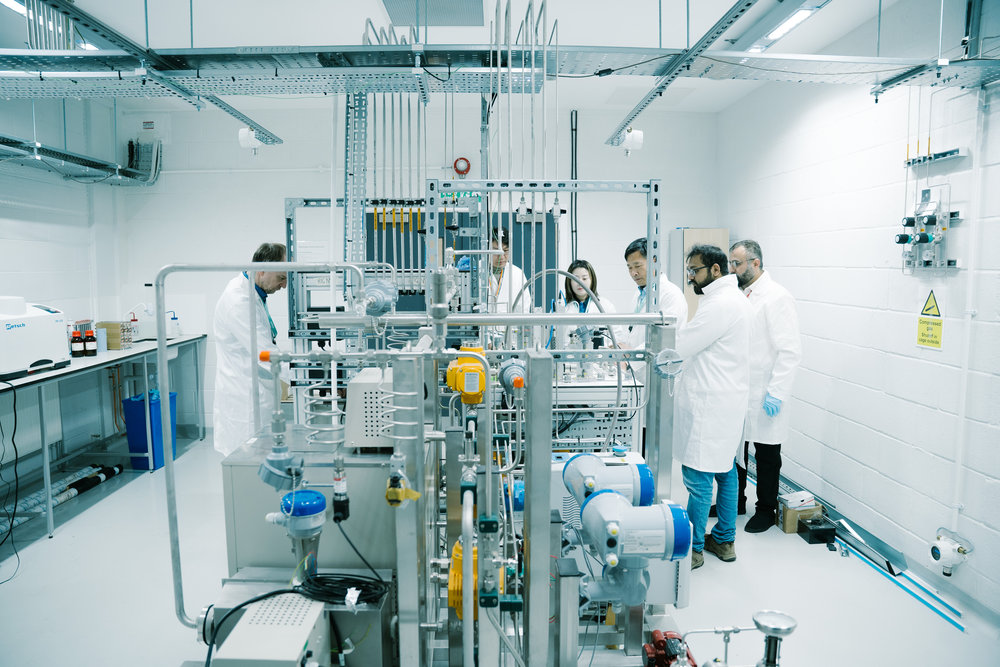
London South Bank University has opened a new purpose‑built high-standard hydrogen laboratory featuring unique metal‑hydride test rigs and thermochemical system designs not found elsewhere in the UK. The facility strengthens the University’s long‑standing expertise in advanced hydrogen technologies and low‑carbon thermal energy systems.
The LSBU Hydrogen Lab will support the investigation and development of decarbonized hydrogen supply chains for a range of applications, including transport, industrial processes, the built environment and energy storage systems.
As demand grows for cleaner, more flexible energy systems, hydrogen is emerging as a way to deliver heat at scales and temperatures that many low‑carbon options cannot. Improving how hydrogen is stored, moved and integrated with existing infrastructure can make energy‑intensive processes more efficient and reduce the amount of heat that is currently wasted across industry.
A major step forward for heat recovery research in the UK. At the heart of the new facility are two advanced, first‑of‑their‑kind test rigs based on metal hydride technology. One of these systems is a pioneering hydrogen heat pump capable of recovering industrial waste heat and upgrading it to around 130 °C, temperatures suitable for integration into district heating networks. This marks a major step forward for high‑grade heat recovery research in the UK.
The laboratory builds on LSBU’s world‑leading work in hydrogen innovation. In 2021, a team led by Professor Yunting Ge, head of the new lab, launched a global‑first research program exploring how hydrogen technologies could recover waste heat from energy‑intensive industries — including steel, glass, paper and food processing — and convert it into usable heating and cooling. The project highlighted a significant opportunity: approximately 60% of industrial waste heat produced in the UK (~48 TWh/yr) could be reused, offering major cost and carbon‑saving potential.
The new laboratory will accelerate this research by enabling the testing of chemical heat pumps, long‑distance energy transport systems and advanced thermal technologies that could transform industrial decarbonization and low‑carbon heat networks.
Led by Professor Ge, the laboratory is supported by a highly qualified team of postdoctoral researchers, research assistants, PhD candidates and an experienced technician. Its work is underpinned by substantial funding from the Engineering and Physical Sciences Research Council, Innovate UK and several industrial collaborators.
Professor Ge, from the Energy, Materials and Environment Research Centre, said, "The new facility allows us to validate hydrogen thermochemical processes under operational conditions, using instrumentation and test rigs specifically designed for high‑grade heat recovery. It enables us to study system efficiency, thermal‑cycling performance and the kinetics of metal‑hydride materials with far greater accuracy. These insights are essential for translating hydrogen‑based heat pump and storage technologies into scalable solutions for industrial applications and low‑carbon heat networks.”
The LSBU Hydrogen was opened by Dame Tamara Finkelstein DCB, CEO of the Royal Academy of Engineering. She said, “Facilities like the LSBU Hydrogen Lab are essential if we are serious about decarbonizing our economy. What makes this lab stand out is its focus on practical, applied research, bringing researchers and engineers together to move ideas from concept to real‑world testing. That ability to trial, learn and iterate is what turns research excellence into solutions that industry and communities can actually use.”
The opening of the LSBU Hydrogen Lab reinforces the University’s leadership in low‑carbon energy research, driving forward innovation that can support cleaner industry, more resilient energy systems and a more sustainable future.
From The Archives
Connect with H2Tech